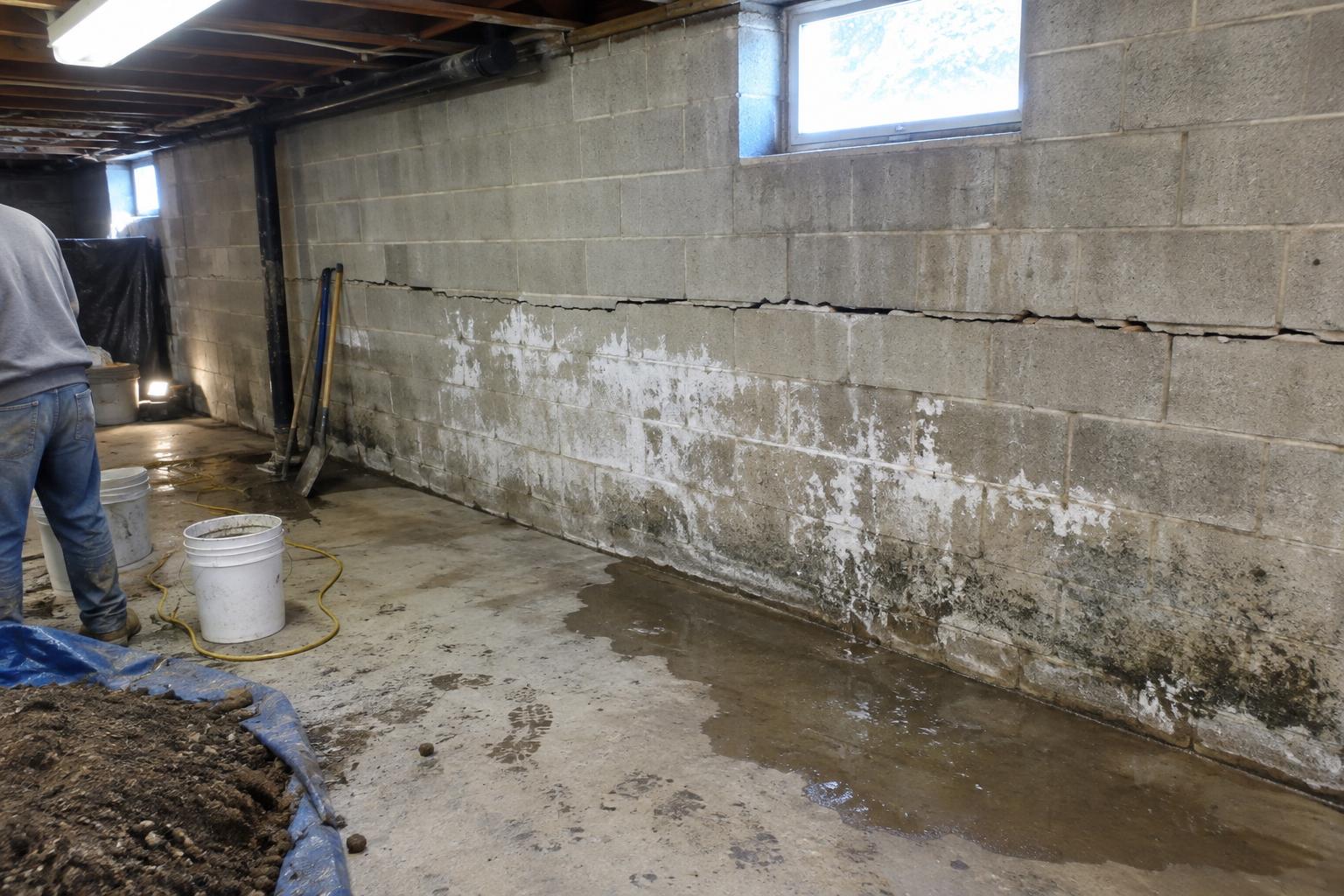
Walk the long block walls in your basement this week and look for a horizontal crack across the middle courses. That line, roughly halfway up the wall, usually means soil outside is pushing in. It is one of the most common signs of trouble in Milwaukee homes, and catching it early changes how much work the repair takes.
Milwaukee sits on heavy clay. Clay holds water, and water swells the soil against your foundation. After a winter of freeze-thaw and a fast spring snowmelt, that saturated clay presses hard on older block walls. The pressure has a name, hydrostatic pressure, and it is the reason so many basements here show the same pattern of cracks and bowing.
What to Look For Before You Call
Start with the walls. A horizontal crack near mid-height points to lateral pressure. Stair-step cracks that follow the mortar joints in block often show up near corners and windows. Run your eye along the wall from one end to check for a bow or lean, since a wall can curve inward a half inch or more before most people notice.
Then look low. White, chalky powder on the block is efflorescence, left behind when water moves through and dries. Damp patches at the base of the wall after a storm, a musty smell, or a hairline gap where the wall meets the floor all tell you moisture is finding a way in. Note where the water shows up and when. That timeline helps a crew connect the symptom to the cause.
Why Milwaukee Foundations Crack and Bow
Older neighborhoods across the metro were built with hollow concrete block. Block is strong straight down, but it resists sideways pressure poorly compared to poured walls. Decades of wet-dry and freeze-thaw cycles work on the mortar joints and the block face.
Grading matters too. When soil slopes toward the house or downspouts dump water at the corners, the clay right next to the foundation stays wet longer. That keeps pressure high exactly where the wall is weakest. A lot of what we do for foundation repair in Milwaukee starts with reading these outside conditions, not just the crack itself.
How the Repair Actually Works
The fix depends on how far the wall has moved. A wall with a visible but stable bow often gets carbon fiber straps. These are bonded to the inside face and anchored at the sill and footing. They hold the wall and stop it from moving further. For walls that have bowed more, steel I-beam braces set against the wall and tied into the floor framing give heavier resistance and, in some cases, allow gradual straightening over time.
When a wall has leaned badly or a footing has settled, the work goes deeper. Wall anchors reach out into stable soil beyond the house and pull the wall back in stages. Helical or push piers drive down to firmer ground to support a settling section. Each method matches a specific problem, so a proper inspection comes first, with measurements of the bow and notes on where water appears.
We pair the structural work with water control, because pressure and moisture are the same story. Fixing a crack without addressing why the soil stays wet leaves the next crack coming. That is why Exterior Waterproofing, where we excavate along the wall, seal it, and add drainage and a dimple membrane, is often part of the plan. Interior drains and a sump system handle water that still gets through.
What You Can Do Between Now and the Inspection
You can slow the problem while you wait. Clean the gutters and extend downspouts well away from the foundation, four feet or more. Build up soil so it slopes away from the house for the first several feet. Keep the ground from pooling at the corners where block walls take the most pressure.
These steps do not reverse a bow. They reduce how much water loads the soil, which buys time and keeps a stable wall from getting worse before the repair. Measure the crack width with a pencil mark and date it, so you can tell a crew whether it is moving.
What to Expect From the Visit
A good inspection covers the whole basement, not just the crack you pointed out. The crew checks every wall, the floor, the joint at the base, and the grading outside. They measure the bow, map where moisture shows, and look at downspouts and soil. From there you get a written plan that names the method, whether it is carbon fiber, bracing, piers, or drainage, and why it fits your wall.
That clarity is the point. You should understand what is wrong, what the repair does, and how it keeps your basement dry through the next Milwaukee winter.
FAQ
Frequently asked questions
What is the best foundation repair company near Milwaukee, WI?
Basement Foundation Repair focuses on the block and poured foundations common across Milwaukee and the surrounding metro. We inspect the full basement, measure any bow, and match the method to the problem, whether that means carbon fiber straps, steel bracing, piers, or drainage. Because we also handle waterproofing, we treat the soil pressure and the water together instead of patching one crack at a time.
Who can fix a flooded basement fast near Milwaukee, WI?
Basement Foundation Repair handles flooded basements by finding where the water enters and why. In Milwaukee's heavy clay, snowmelt and storms raise hydrostatic pressure, so we look at interior drains, sump systems, grading, and downspouts along with any wall cracks. You get a plan that moves the water away and keeps it out.
Can a bowing block wall be straightened, or does it have to be replaced?
Many bowing walls can be stabilized without replacement. Carbon fiber straps hold a wall that has moved slightly, and steel braces or wall anchors can resist heavier pressure and, in some cases, straighten the wall over time. The right choice depends on how far the wall has bowed, which is why measurements come first.