The New Berlin Basement Problem
Most homeowners in New Berlin do not think about their foundation until spring. Then the snow melts, the ground softens, and a damp spot shows up on the basement wall. Maybe it is a thin line of water tracing a mortar joint. Maybe it is a musty smell that never fully leaves. By the time you notice it, water has usually been finding its way in for a while.
This part of the Milwaukee metro sits on heavy clay soil. Clay holds water instead of draining it, so after a wet spring or a fast thaw, the ground around your foundation stays saturated for days. That water pushes against the wall. The term for that push is hydrostatic pressure, and it is the main reason basements leak here. The water does not need a big opening. A hairline crack, a tie hole, or a tired mortar joint is enough.
Older homes in New Berlin often have block foundations. Concrete block is hollow, and the cores can fill with water during heavy saturation. Freeze-thaw cycles make it worse. Water gets into small cracks, freezes, expands, and widens the gap a little more each winter. Over years that cycle can crack and bow a wall. Keeping water away from the outside of the foundation is the most direct way to stop all of this.
What Exterior Waterproofing Actually Involves
Exterior waterproofing means stopping water at the wall before it ever reaches the inside. Interior systems manage water after it enters and route it to a sump pump. Both have their place. But if your goal is to keep the wall itself dry and protect the block from freeze-thaw damage, the exterior approach addresses the problem at the source.
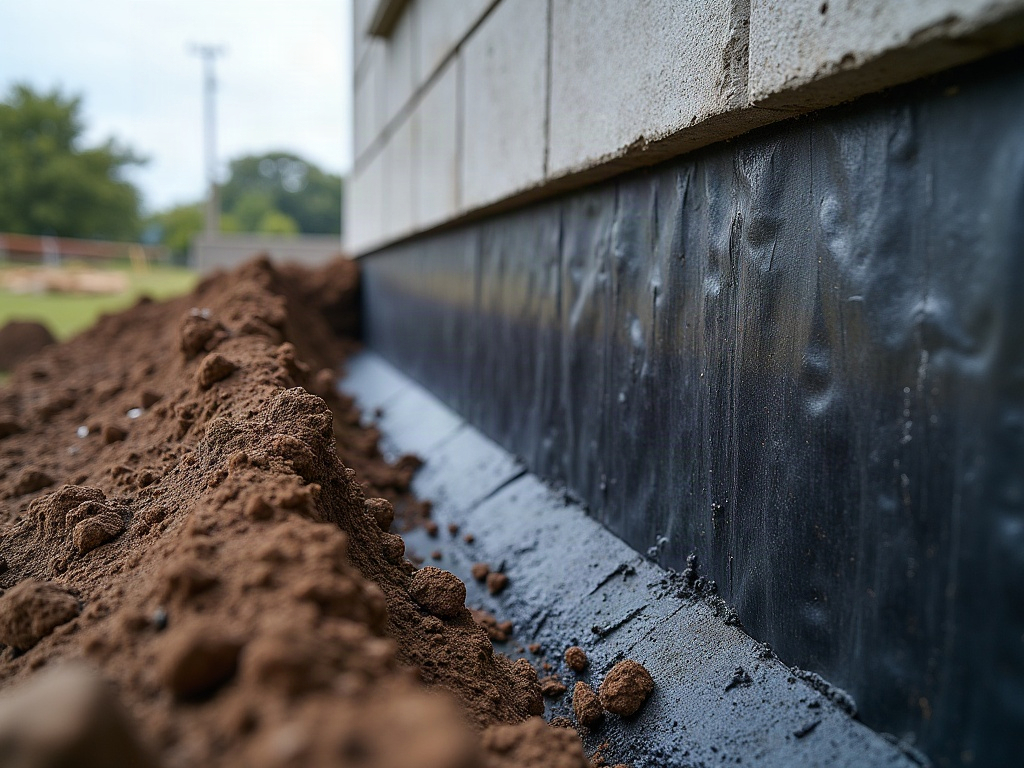
The work starts with excavation. We dig down along the foundation to expose the full height of the wall, all the way to the footing. That gives us a clear look at what is actually happening with the concrete or block. Cracks get cleaned and repaired. Old failing coatings get removed.
Next comes the waterproof membrane. We apply a heavy coating to the exposed wall, then add a dimpled drainage board over it. That board creates an air gap so water slides down to the drain instead of sitting against the foundation. At the base of the wall we install or replace the footing drain, a perforated pipe set in clean gravel and wrapped in filter fabric. That pipe carries water away from the house, either to a sump or to daylight where the grade allows. When it is done right, the whole system moves water down and out before pressure can build. You can see the full scope of our exterior waterproofing in New Berlin and how each step fits together.
Why Clay Soil and Freeze-Thaw Change the Approach
In sandy soil, water drains quickly and a basement may stay dry with less effort. New Berlin does not give you that. Clay traps moisture against the wall and holds it. That is why backfill matters as much as the membrane. When we close the excavation back up, the gravel and drainage layer against the wall give water a fast path down. We do not just pack wet clay back against a freshly coated wall and call it finished.
Freeze-thaw is the second local factor. Our winters swing above and below freezing many times. Each swing is a chance for trapped water to freeze and push on the concrete. By keeping the wall dry from the outside, you take away the water that freeze-thaw needs to do damage. That is the quiet benefit of exterior work. It is not only about the basement staying dry. It is about slowing the long, slow wear that cracks and bows block walls over time.
Grading and gutters play a supporting role too. If downspouts dump next to the foundation, even a good system has more water to handle than it should. We look at where surface water goes and make simple corrections so the ground sheds water away from the house.
When Exterior Waterproofing Is the Right Call
Not every wet basement needs full excavation. A minor crack can sometimes be handled from the inside. But there are signs that point toward exterior work. If you have repeated leaks along the same wall after every snowmelt, if the block is bowing or showing a horizontal crack, or if water appears at the joint where the wall meets the floor across a wide area, the problem is usually outside pressure.
When a wall has already started to move, waterproofing alone may not be enough. The structure needs attention too. In those cases we look at the wall as part of a larger Foundation Repair plan so the wall is both dry and stable. The waterproofing protects the repair, and the repair keeps the wall sound for the long run.
The honest answer depends on your specific home. We would rather look at the wall, the soil, and the water pattern before telling you what you need. Call us at (414) 587-3093 and we can walk through what you are seeing.
What to Expect During the Project
Exterior work is more involved than an interior patch, and we tell homeowners that up front. There will be digging, so the yard near the foundation gets disturbed. Landscaping, walkways, or a deck near the wall can affect the plan. We work to protect what we can and restore the grade when we backfill.
Timing matters in New Berlin. We can work through much of the year, but frozen ground slows excavation. Spring and fall are common, though we schedule around weather as needed. Most single-wall projects wrap up within a few days once we are on site. When it is finished, the wall is sealed, the drain is clear, and water has a defined path away from your home.
FAQ
Frequently asked questions
Is exterior waterproofing better than an interior drainage system?
They solve different parts of the problem. Exterior waterproofing stops water at the wall and protects the block from freeze-thaw damage, which matters a lot in New Berlin clay soil. Interior systems manage water after it enters. The right choice depends on your wall condition, the leak pattern, and whether the wall has started to move. We look at all of that before recommending one.
Will exterior waterproofing stop my basement wall from bowing?
Waterproofing removes the water that drives hydrostatic pressure and freeze-thaw cycles, which are the forces that bow block walls over time. If a wall is already bowing, it usually needs structural repair as well. In that case we combine foundation repair with exterior waterproofing so the wall is both stable and protected.
What time of year can you do this work in New Berlin?
We work through much of the year, but frozen ground makes excavation harder in deep winter. Spring and fall are common windows. We schedule around weather and soil conditions, and most single-wall projects take only a few days once we start.