If you own a home in Wauwatosa, you probably know the springtime routine. The snow starts melting, the ground stays frozen underneath for a while, and water has nowhere to go but sideways and down. A few days later you notice a damp corner in the basement, a musty smell near the floor, or a thin line of water tracking along the base of a block wall. It is a common story here, and it usually points to water pressure building up against the outside of your foundation.
This post walks through what exterior waterproofing actually involves, why it matters for the soil and weather we deal with in the Milwaukee metro, and how to tell whether it is the right fix for your home.
Why Wauwatosa Basements Take On Water
The soil under most of Wauwatosa is heavy clay. Clay holds water instead of letting it drain away, so after a rainstorm or a fast melt, the ground around your foundation stays saturated for a long time. That saturated soil presses against your walls. The technical term is hydrostatic pressure, and it is the main force pushing water through cracks, joints, and porous block.
Our winters make it worse. Freeze-thaw cycles run all season. Water in the soil freezes, expands, and then thaws, and that constant movement works on foundation walls year after year. Older block foundations, which are common in this part of the county, are especially vulnerable. Block is hollow and the mortar joints give water an easy path. Over time you see stair-step cracks, bowing, or seepage that keeps coming back no matter how many times you paint the inside.
Many homeowners try interior sealers first. Those products can slow surface dampness, but they do not stop the water pressure outside the wall. The water is still there, still pushing. That is where exterior work comes in.
What Exterior Waterproofing Actually Involves
The goal of exterior waterproofing in Wauwatosa is simple to state and harder to do. You stop water at the outside face of the foundation so it never reaches the basement in the first place.
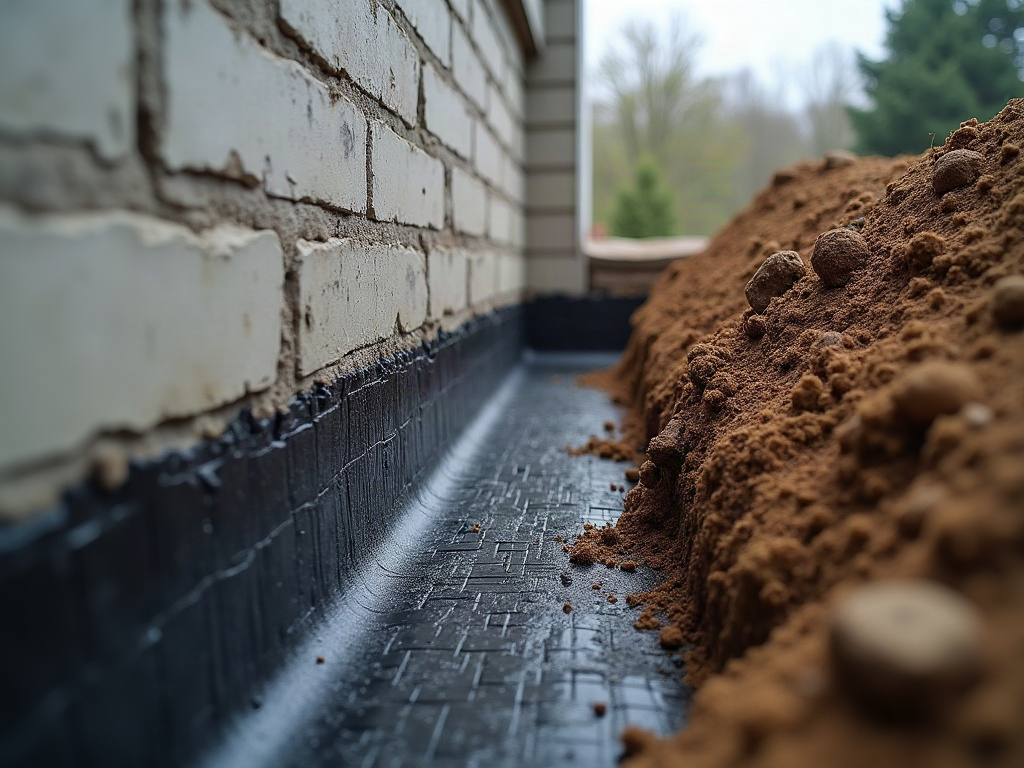
The work starts with excavation. Crews dig down along the affected wall, usually to the footing. This gives full access to the foundation from the outside. Once the wall is exposed, it gets cleaned and any cracks or damaged joints are addressed. Then a waterproofing membrane is applied across the wall surface. This is a heavy coating or sheet that creates a continuous barrier, not the thin paint-on product sold at hardware stores.
Many installations also include a drainage board or dimpled membrane over the coating. This gives water a channel to travel straight down to a drain tile system at the footing instead of soaking into the wall. The drain tile then carries water away to a sump or a proper discharge point. Finally the trench is backfilled, often with material that drains better than the original clay.
Done correctly, this system manages water before it becomes a basement problem. It is the most thorough approach available, which is why it is often recommended for homes with recurring seepage or foundations that show real distress.
Signs You Need More Than a Quick Fix
A little condensation on a cold wall in July is normal. Water that shows up every spring is not. Here are the signs that point toward exterior work rather than a surface patch.
You see water entering along the joint where the wall meets the floor after every heavy rain. You notice horizontal cracks or bowing in a block wall, which suggests soil pressure is actively pushing on the foundation. You have efflorescence, the white chalky residue left behind when water moves through block. You keep applying interior sealers and the problem returns.
When a wall is bowing or cracking, waterproofing alone may not be enough. Structural movement usually needs its own solution, and that is where Foundation Repair comes in alongside the waterproofing. Addressing both at once, while the wall is already exposed, often saves time and cost compared to doing them separately.
Timing the Work in Wisconsin
People often ask when to schedule this kind of project. Late spring through fall is the practical window in our climate because the ground is workable and excavation is straightforward. That said, if you already have active water coming in during the melt, it is worth getting an inspection right away so a plan is ready before the next big storm.
One thing to keep in mind is grading and downspouts. Exterior waterproofing handles water at the wall, but you also want surface water moving away from the house. Extending downspouts and making sure the soil slopes away from the foundation supports the system and reduces how much water reaches it in the first place.
Getting a Straight Answer for Your Home
Every Wauwatosa basement is a little different. The age of the foundation, the depth of the water problem, and the layout of your lot all shape the right approach. A proper inspection looks at where water is entering, the condition of the block, and what the soil and drainage around the house are doing.
If you are dealing with a wet basement or a wall that worries you, call us at (414) 587-3093. We will look at the actual conditions and give you a clear recommendation, whether that is full exterior waterproofing, targeted repair, or a combination of both.
FAQ
Frequently asked questions
How long does exterior waterproofing take on a typical Wauwatosa home?
Most single-wall projects take a few days, depending on how much needs to be excavated and whether structural repair is included. Weather and soil conditions can affect the timeline, but a clear estimate of the schedule is part of the inspection.
Is interior waterproofing ever enough on its own?
Interior systems can manage water that has already entered and are a good fit for some situations. But when heavy clay soil and freeze-thaw pressure are driving water through the wall, exterior waterproofing addresses the source. We recommend the approach that fits your specific conditions.
Will exterior waterproofing fix a bowing block wall?
Waterproofing stops water, but a bowing or cracking wall usually has a structural cause that needs its own repair. Since the wall is already exposed during excavation, it is often efficient to handle both the waterproofing and the foundation repair at the same time.