Why Brookfield Basements Stay Damp
If you own an older home in Brookfield, you have probably seen the signs. A musty smell after a wet spring. A dark stain creeping along the bottom of a block wall. A puddle near the corner of the basement every time the snow melts fast. These are not random problems. They come from the ground your house sits on and the weather it has to survive.
The Milwaukee metro sits on heavy clay soil. Clay holds water instead of letting it drain away. When that water builds up against your foundation, it pushes against the wall. We call that hydrostatic pressure, and it is relentless. After a heavy rain or a quick snowmelt, the soil around your foundation can hold water for days. That water looks for any crack, pore, or gap it can find, and a block foundation gives it plenty of options.
Add our winters to the mix. Water in the soil freezes, expands, then thaws. It does this over and over from November into April. That freeze-thaw cycle works like a slow hammer on your foundation. Over the years it opens hairline cracks, widens mortar joints, and can even start to bow a block wall inward. By the time water shows up inside, the damage outside has usually been building for a while.
What Exterior Waterproofing Actually Does
Interior systems manage water after it has already gotten in. They catch it, collect it, and pump it out. That has its place, and for some homes it is the right call. But exterior waterproofing in Brookfield takes a different approach. It stops water before it ever reaches the wall.
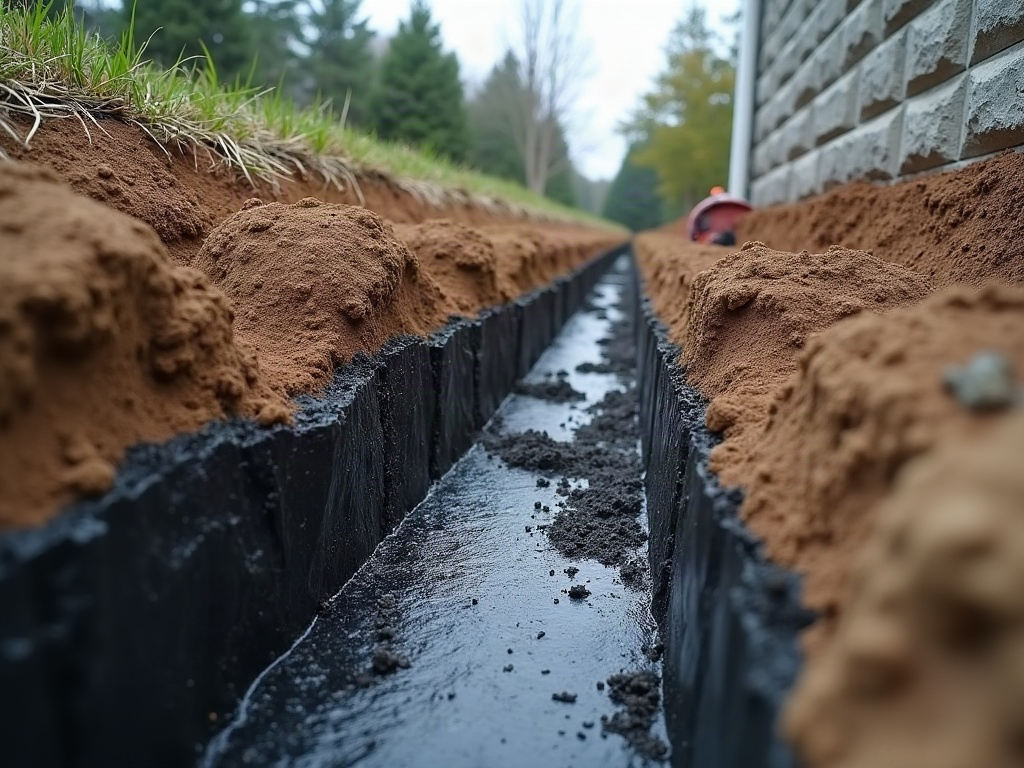
The work starts with excavation. We dig down along the outside of the foundation to expose the full height of the wall, all the way to the footing. This is the part homeowners usually find surprising. It is real digging, and it means moving soil, but it gives us access to the one surface that matters most, the outside face of the wall.
Once the wall is exposed, we clean it and repair any cracks or damaged mortar joints. Then we apply a waterproof membrane across the entire surface. This is not the thin tar coating builders used decades ago. Modern membranes flex with the wall and seal it against moisture. We often add a drainage board over the membrane so water drifts down to the footing instead of pressing against the house.
At the base of the excavation, we install or replace the exterior drain tile. This perforated pipe sits in gravel next to the footing and carries water away to a discharge point. When the soil is saturated after a Brookfield snowmelt, that drain gives the water somewhere to go besides your basement.
How the Work Goes in a Typical Brookfield Home
Most of the homes we see in Brookfield have poured or block foundations from the mid twentieth century. The approach is similar, but block walls need extra attention because the hollow cores can hold water and the mortar joints are natural weak points.
We start by locating utilities and planning the dig so your yard, walkways, and landscaping take the least disruption possible. After excavation, we inspect the wall in daylight. Sometimes a wall that leaks only in one spot turns out to have several joints that are seeping. Seeing the whole surface at once lets us address all of it in one trip.
After the membrane, drainage board, and drain tile are in place, we backfill carefully. We compact the soil in layers and grade the surface so the ground slopes away from the house. Proper grading matters more than people expect. If your yard tilts toward the foundation, you are feeding water straight to the wall no matter what else you do.
The whole process usually takes a few days per side, depending on depth, access, and weather. We work around Wisconsin's seasons, since exterior work is easier before the ground freezes solid.
When Exterior Waterproofing Makes Sense
Not every damp basement needs full exterior work. But there are clear cases where it is the better path. If your foundation wall is cracked, bowing, or showing structural movement, sealing from the outside while addressing the wall itself is the stronger long-term fix. In those situations, waterproofing often goes hand in hand with Foundation Repair, since you want to correct the structure and protect it at the same time.
Exterior waterproofing also makes sense when water keeps coming in despite an interior system, when you are finishing a basement and want to protect your investment, or when the original builder's coating has simply worn out. If you are planning to landscape or regrade anyway, doing the waterproofing first saves you from digging the same ground twice.
The best way to know is an inspection. We look at the inside, the outside, the grading, and the gutters, then tell you plainly what the wall needs. Sometimes the answer is a smaller repair. When it is exterior waterproofing, you will understand why.
Protecting the Work Over Time
Waterproofing lasts longer when the water load stays manageable. Keep gutters clean and make sure downspouts carry water several feet away from the foundation. Watch your grading each spring, since settling soil can start to tilt back toward the house. If you notice new dampness, a shifting crack, or water pooling near the wall, call us before another freeze-thaw season adds to it.
To talk through your basement and get an honest assessment, reach Basement Foundation Repair at (414) 587-3093.
Frequently asked questions
Is exterior waterproofing better than an interior drain system?
It depends on your home. Exterior waterproofing stops water before it reaches the wall, which is ideal when the wall is cracked, bowing, or when interior systems have not solved the problem. Interior systems manage water after entry and can be the right choice in other cases. An inspection tells us which fits your Brookfield foundation.
Will the excavation ruin my yard and landscaping?
We dig only where we need access, plan around walkways and plantings, and backfill in compacted layers with proper grading when we finish. There is real disruption during the work, but we take care to restore the area. If you plan to regrade or landscape anyway, doing the waterproofing first avoids digging twice.
When is the best time of year to do this work in Brookfield?
Exterior work is easiest when the ground is not frozen, so late spring through fall is ideal. That said, if water is actively coming in and damaging your basement, we will assess the situation and advise on timing. Call us to schedule an inspection and plan the work around the season.